
Widad’s Story: Resilience, Recovery, and the Power of Education
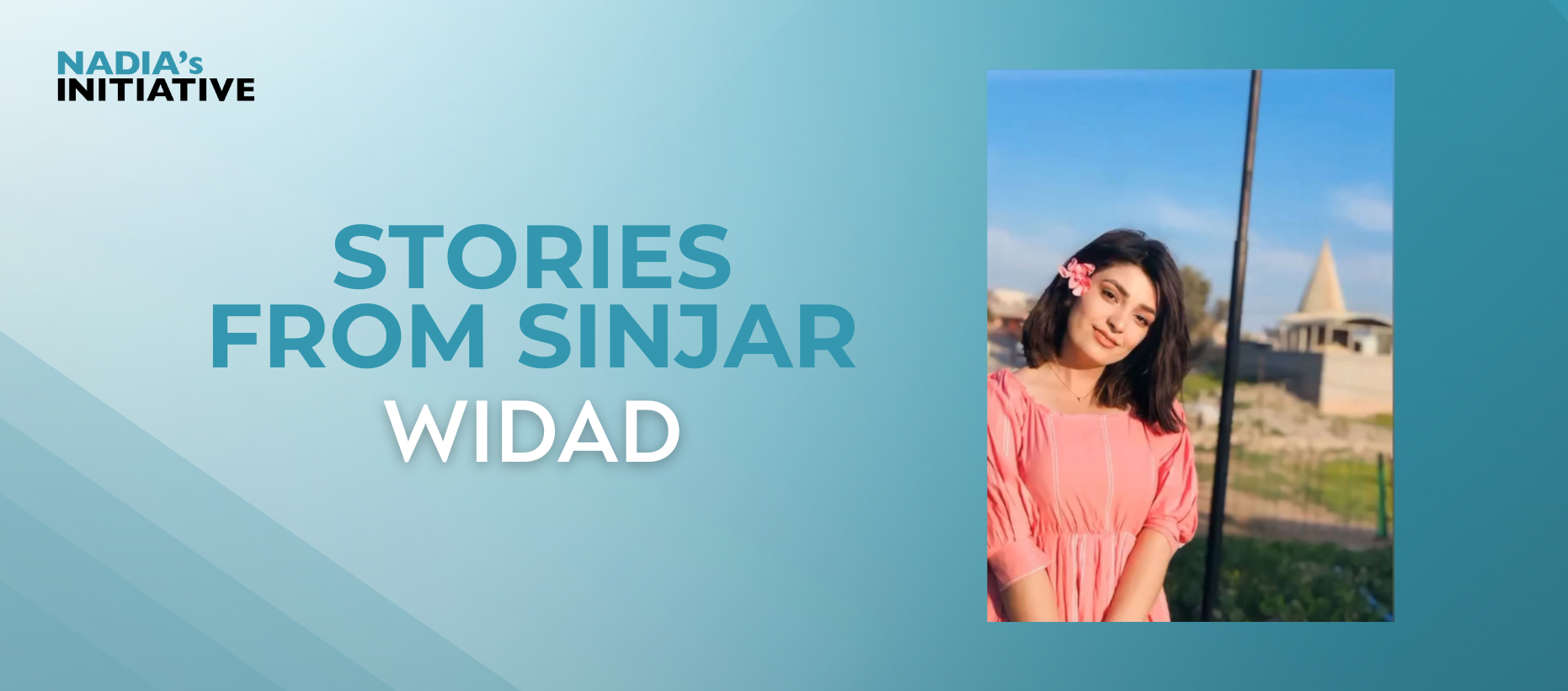
When Widad was just 13, she fled her native Sinuni (a sub-district of Sinjar) with her family under gunfire, joining thousands of Yazidis forced from their homes during the 2014 genocide. They escaped with almost nothing, taking shelter first in her uncle’s house, where the little money they had ran out after about a month. She remembers collecting discarded clothes – whatever neighbors no longer wanted, even what had been thrown away – just to get by. Eventually, the family moved to a small town in Sulaymaniyah called Tigran, where they stayed for about three years.
For most of her siblings, displacement meant an abrupt end to their education. There were no Arabic-language schools in Tigran, and for a time, it seemed that Widad’s own schooling would be interrupted indefinitely. But she refused to accept that. Night after night, she cried and pleaded with her parents to let her move alone to a displacement camp where relatives lived – simply so she could continue going to school. It was a choice no young teenager should have to make, but one she embraced with determination. When her parents finally agreed, she described it as one of the happiest moments of her life.
Years later, when her family returned to Sinjar and to their hometown of Sinuni, they were met with devastation. Their home had been destroyed, and the place they had longed to return to now resembled the tents they had lived in during displacement. Nevertheless, Widad pushed forward. She completed her studies, became a nurse, and remained determined to grow despite the limited opportunities available to young women in post-genocide Sinjar.
The path to opportunity widened when she learned about NI’s collaboration with Jesuit Worldwide Learning (JWL). She enrolled in the English language program, starting at the beginner level. Today, she is studying at an advanced level and has applied for the Peace Leader professional course (another program offered by JWL), confident that it will help her continue developing her skills and open new doors in the future. Education has reshaped not only her confidence but her sense of possibility. “It has changed my perspective of the future in a very positive way,” she says.
Widad’s determination has become a catalyst within her family and community. Her siblings have since joined the English language program and she shares what she learns with neighbors and friends. Her dreams have expanded, too. She imagines building a library in Sinuni one day, a space where children can grow up surrounded by books and opportunities she fought so hard to access.
Widad’s journey reflects the resilience at the heart of recovery in Sinjar: young people carving out futures in the aftermath of loss, women leading transformation within their families and communities, and returnees rebuilding their lives in places still struggling to access essential services. The program she participates in – delivered with Jesuit Worldwide Learning (JWL) and funded by the L’Oréal Fund for Women – is part of a broader effort to support women and youth in Sinjar as they reclaim their education, their dignity, and their future.